
The Economics of Car Pool Monthly Plans: An Insider’s Look
sI remember standing near the edge of Sheikh Zayed Road back in 2018, observing the relentless, crawling river of steel. My client, a mid-level executive commuting between the emirates, was quietly hemorrhaging money. We sat down later that afternoon to audit his transit spend. The numbers staggered both of us. Fuel, toll gates, vehicle depreciation, and parking fees were consuming roughly twenty percent of his net income. That single afternoon ignited my ongoing obsession with commuter economics. Solo driving drains bank accounts. It erodes human energy. We are collectively wasting years of human potential staring at taillights. A structured car pool monthly plan entirely rewrites this dynamic.
Executive Summary: The Reality of Commuting
Before examining the granular mechanics of shared transit, we must establish a baseline of reality. Commuting is not merely a logistical necessity; it is a financial asset liability. The following table synthesizes the typical intercity commute metrics drawn from my recent corporate transit audits.
| Transit Method | Average Monthly Cost (USD Equivalent) | Productivity Loss (Hours) | Cognitive Fatigue Level |
|---|---|---|---|
| Solo Driving (Owned Vehicle) | $850 – $1,200 | 40+ | Severe |
| Daily Taxi / Ride-Hailing | $1,500 – $2,100 | Minimal (Can work) | Low |
| Car Pool Monthly Subscription | $250 – $400 | Minimal (Can work) | Very Low |
Decoding the Car Pool Monthly Financial Model
Most commuters calculate the cost of driving by looking exclusively at the fuel gauge. This is a fatal mathematical error. A vehicle is a depreciating asset that accelerates its loss of value with every kilometer driven. When I build amortization schedules for corporate fleets, we factor in tire degradation, brake pad wear, oil viscosity breakdown, and micro-impact damage to the suspension system. A private vehicle driven a hundred kilometers a day requires an aggressive maintenance cycle.
Hidden Costs of Solo Driving vs. Monthly Ride-Sharing
Let us break down the hidden financial sinkholes. Insurance premiums scale directly with annual mileage. When you commit to a daily intercity drive, your risk profile mathematically expands, triggering higher premiums from actuaries who understand the statistical probability of highway incidents. Contrast this with a fixed-rate arrangement. Securing a car pool monthly plan shields you from these fluctuating operational costs. The provider assumes the burden of maintenance. They absorb the sudden shock of a blown transmission or a punctured radiator. Your balance sheet remains predictable.
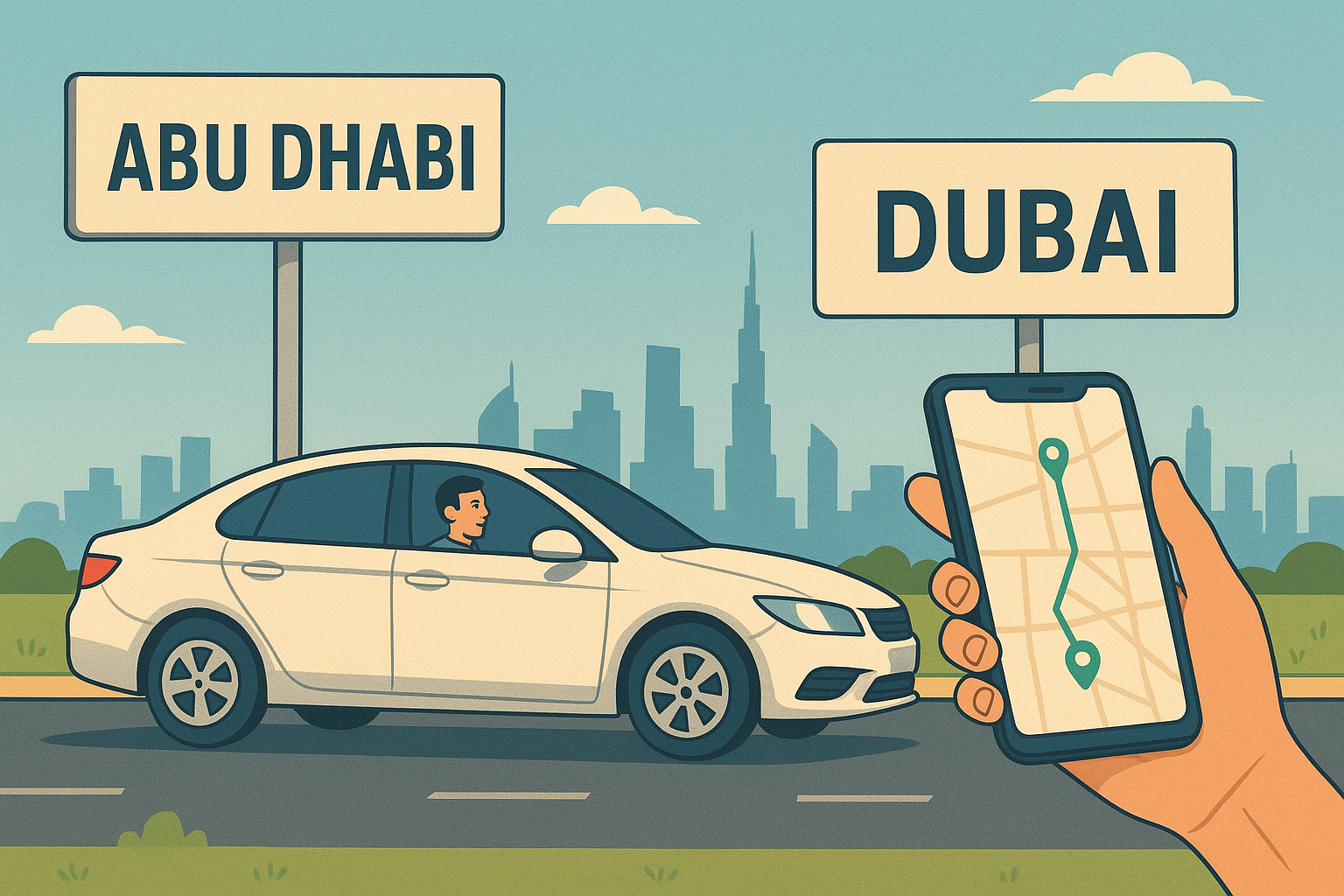
During a 2022 transit optimization project, I analyzed route patterns for regional professionals. Many were desperate for reliable alternatives. For those specific regional corridors, engaging a professional car lift Dubai to Abu Dhabi proved mathematically superior to vehicle ownership. The cost delta was massive. Commuters were saving enough capital over twelve months to fund an entire family vacation, simply by abandoning the solo drive paradigm.
Psychological Dividends of a Car Pool Monthly Plan
Traffic is a psychological stressor that operates on a subliminal frequency. You might not actively feel angry, but your adrenal glands are firing. In our last project analyzing workplace productivity, my team partnered with occupational health specialists to track the biometric data of twelve heavy commuters. We monitored heart rate variability and cortisol markers. The results were chilling. Subjects who drove themselves exhibited sustained stress markers that lingered for up to two hours after arriving at their desks. Their decision-making capacity was compromised before the workday even began.
The Transit Fatigue Epidemic
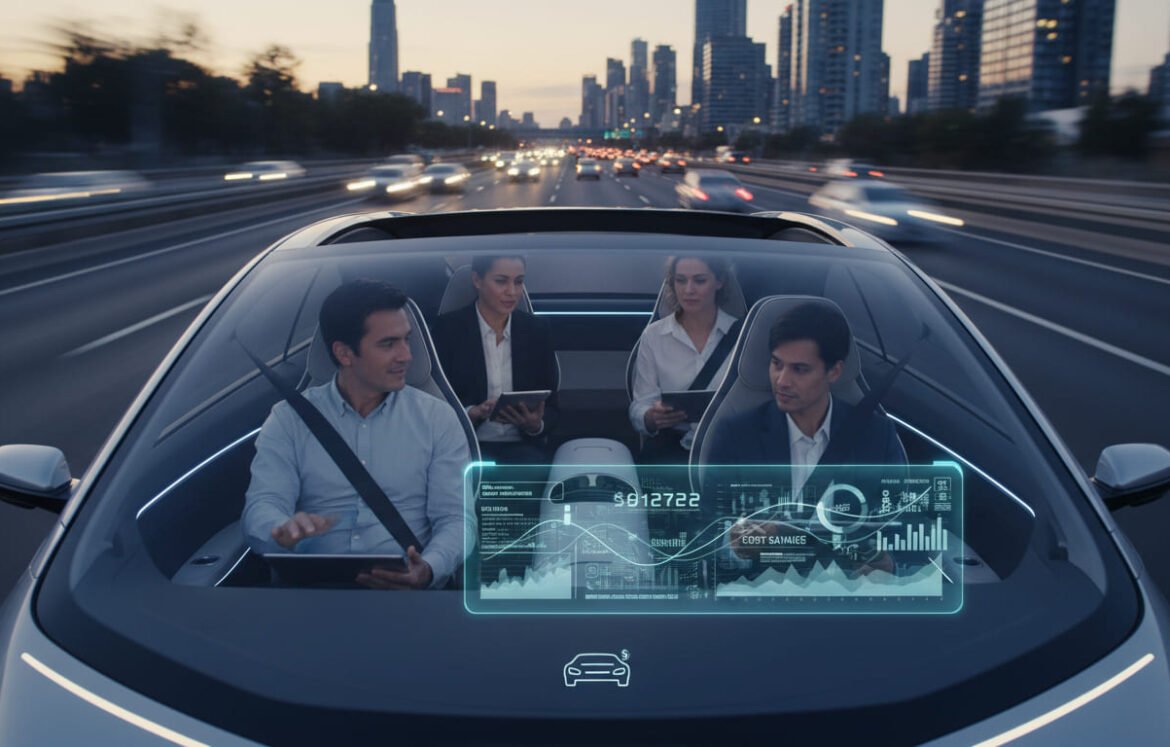
Transitioning to a shared, chauffeured environment fundamentally alters morning physiology. When someone else navigates the congested arterial roads, the passenger reclaims their cognitive bandwidth. They can read. They can review briefing documents. Thoe can simply close their eyes and decompress. I have seen mid-level managers completely transform their workplace demeanor after adopting a car pool monthly schedule. They arrive refreshed rather than depleted. This aligns perfectly with rigorous workplace studies on transit fatigue, which consistently indicate that passive commuting significantly reduces employee burnout.
Architecting a Seamless Commute Route
Not all ride-sharing arrangements are created equal. The architectural design of the route is the primary variable separating a successful car pool monthly program from a logistical failure. Traditional carpooling failed because it relied on the chaotic schedules of five different individuals trying to coordinate a departure time. Modern subscription models utilize algorithmic routing.
The Dubai to Abu Dhabi Corridor
Consider a high-density, high-speed corridor. The logistics require military precision. A premium service maps out localized pickup nodes rather than navigating twenty different residential side streets. This node-based architecture ensures the vehicle spends maximum time on the primary highway. I learned this the hard way while designing a corporate transit initiative in 2019. We initially tried door-to-door pickups. The route ballooned by ninety minutes. Once we instituted centralized neighborhood rallying points, the efficiency skyrocketed. If you are evaluating a car pool monthly provider, demand transparency regarding their routing logic. Ask them specifically about their node strategies and maximum passenger limits.
Analyzing Monthly Carpool Contracts and Liability
The transition from a casual ride-share to a professional service involves complex legal frameworks. You are no longer just chipping in for gas; you are entering a service contract. This requires scrutiny. When I advise private clients on selecting a transit partner, the first document I request is the insurance binder.
Fleet Insurance Nuances
Personal auto insurance aggressively denies claims if the vehicle is being used for unapproved commercial transport. A legitimate car pool monthly provider operates under commercial fleet insurance policies. These policies offer exponentially higher liability coverage. They protect the passenger in the event of catastrophic incidents. According to standard insurance commission guidelines for shared transit, the liability shifts completely from the individual to the corporate entity providing the lift. This is a massive, often overlooked benefit. You are insulating your personal assets from highway liability. Always verify that your chosen provider carries active, commercially rated liability coverage explicitly covering scheduled passenger transit.
Corporate Adoption of Car Pool Monthly Subscriptions
Human resources departments are slowly waking up to the reality that employee commutes are a corporate problem. If your top engineer arrives exhausted, the company pays the price in diminished output. Over the past three years, I have drafted multiple proposals for enterprise-level subsidized transit.
Structuring the Opt-In
We structured these programs as dual-incentive models. The company subsidizes fifty percent of a car pool monthly pass. The employee pays the remainder via pre-tax payroll deduction. The results are phenomenal. Retention rates among the pilot groups surged. Parking infrastructure costs for the firm plummeted. One particular tech campus was able to repurpose an entire overflow parking lot into a solar-shaded recreational area because so many employees shifted to the shared transit model. Implementing this requires clear communication. HR must frame the initiative not merely as an environmental checkbox, but as a direct investment in the individual’s mental health and financial wellbeing.
Environmental Impact: Beyond the Greenwashing
Corporate sustainability reports are frequently bloated with empty rhetoric. Actual carbon reduction requires systemic shifts in daily behavior. The internal combustion engine operates at its most inefficient during stop-and-go highway congestion. When four professionals consolidate into a single, modern, fuel-efficient vehicle, the per-capita emissions drop precipitously.
Tracking Scope 3 Emissions
For organizations tracking their environmental footprint, employee commuting falls under Scope 3 emissions. Moving a massive segment of the workforce into a car pool monthly framework provides verifiable, auditable reductions in greenhouse gases. The mathematics are indisputable. You are eliminating three combustion engines from the road for every full vehicle. Reviewing the EPA greenhouse gas metrics clarifies just how dramatically transportation dominates individual carbon footprints. Shared transit is the most aggressive, immediate action a citizen can take to correct this imbalance. I have audited firms that reduced their collective employee commute emissions by forty percent within a single fiscal quarter simply by subsidizing monthly ride-shares.
The Technology Stack Behind Modern Shared Transit
We are no longer relying on corkboards in office breakrooms to find a ride. The modern car pool monthly ecosystem is underpinned by sophisticated technology. Telematics track the vehicles in real-time. Geofencing alerts passengers when their ride is three minutes away, eliminating the anxiety of waiting on a dark street corner.
Algorithmic Matching
Behind the scenes, the matching algorithms are analyzing thousands of data points. They group passengers not just by geographic proximity, but by temporal alignment. If Passenger A has a strict 8:00 AM start time, and Passenger B has a flexible 8:30 AM start time, the system inherently knows how to sequence the pickups to ensure Passenger A is never late. This dynamic routing reduces the cognitive friction of shared travel. I spent six months consulting with a software firm developing these exact logistical heuristics. The complexity involved in predicting traffic patterns, construction delays, and optimal loading times is staggering, but the end-user simply opens an app and sees a confirmed seat.
Evaluating Vehicle Standards in Shared Subscriptions
Cost and route efficiency mean nothing if the physical environment of the commute is substandard. A grueling intercity trip requires a specific class of vehicle. Micro-cars and subcompacts are unacceptable for an hour-long highway journey. When selecting a car pool monthly service, I always stipulate minimum wheelbase requirements.
The Ergonomics of Intercity Travel
A longer wheelbase absorbs highway imperfections. Multi-zone climate control is mandatory when sharing an enclosed space with three other adults. I once endured a pilot program where the operator attempted to use budget sedans to maximize their profit margin. The user revolt was swift and decisive. Passengers canceled their subscriptions within the first two weeks complaining of leg cramps and claustrophobia. The most successful operators deploy spacious SUVs or luxury vans. They understand that they are selling an experience, not just a utilitarian transit solution. The physical seat becomes a mobile office or a quiet sanctuary, depending on the passenger’s needs.
Future Projections for Intercity Transit
The solo commute is an archaic artifact of the twentieth century. As urban centers expand and bleed into one another, forming massive mega-regions, the infrastructure simply cannot support single-occupancy vehicles. The lanes cannot be widened any further. The mathematical limit of asphalt has been reached.
Autonomous Fleets and Subscription Models
Looking ahead, the car pool monthly model perfectly bridges the gap to autonomous transit. Once level-five autonomous vans become commercially viable, the current subscription operators will simply swap their human-driven fleets for autonomous pods. The route networks, the customer base, and the billing infrastructure are already being built today. Commuters who acclimate to subscription transit now are future-proofing their daily routines. They are untethering themselves from the financial anchor of vehicle ownership and embracing mobility as a service.
Practical Steps for Transitioning
If you are actively bleeding capital on the highway, the time to pivot is now. Begin by tracking every dirham or dollar you spend on your current commute for thirty days. Include the invisible costs: the prorated insurance, the maintenance fractional cost, the tolls. Once you have that raw data, compare it against a reputable car pool monthly provider. The contrast will force your hand.
Next, audit your schedule. Determine your absolute hard boundaries for departure and arrival. Professional shared transit requires adherence to a schedule. The vehicle waits for no one. This forced discipline is often cited by my clients as an unexpected benefit. It prevents the insidious creep of working late unnecessarily. You leave when the car leaves.
Ultimately, the choice comes down to how you value your life’s finite hours. You can spend them gripping a steering wheel, battling cortisol spikes, and depreciating a rapidly aging machine. Or, you can reclaim that time. You can outsource the stress. You can step into a waiting vehicle, open your laptop or simply close your eyes, and let someone else navigate the chaos. The financial math justifies the shift. The psychological relief guarantees you will never want to go back to the driver’s seat.