
Corporate Mobility: The Economics of Scoop Carpool Systems
The Commuting Friction Crisis
I distinctly remember sitting in a boardroom overlooking the congested US-101 highway in Silicon Valley. My client, a Fortune 500 hardware manufacturer, was hemorrhaging four million dollars annually on leased off-site parking and private shuttle services. Their workforce was exhausted before the morning stand-up even began. We needed a radical intervention in their Transportation Demand Management (TDM) strategy. That was the exact moment I fully grasped the profound operational necessity of a managed scoop carpool network. Corporate commuting is not merely a human resources issue. It is a massive, multi-million dollar logistical puzzle that directly impacts gross margins, employee retention, and environmental compliance.
Historically, enterprise mobility relied on a fragmented ecosystem of transit subsidies and awkward, physical bulletin boards where employees pinned their daily routes hoping for a passenger. This failed. I watched it happen repeatedly across dozens of corporate campuses. Human behavior is fundamentally resistant to friction. If sharing a ride requires three phone calls, a coordinated schedule, and the awkward exchange of cash for gas, solitary driving remains the default orthodoxy. The introduction of algorithmic scoop carpool models shattered this barrier by subjugating the logistics to background computation. You enter a time window, you define your origin, and the mathematics handle the rest. Let us establish a baseline of what happens when organizations transition from disorganized commutes to structured mobility networks.
Executive Summary: Commuting Modalities Compared
| Mobility Modality | Annual Cost Per Employee | CO2 Emissions (Metric Tons) | Infrastructure Demand | Retention Impact |
|---|---|---|---|---|
| Solitary Commuting (SOV) | $4,200 (Fuel, Wear, Tolls) | 4.6 Tons | 1 Parking Space Required | High Attrition Risk (Stress) |
| Traditional Transit | $1,500 (Subsidized Passes) | 1.2 Tons | Zero Parking Required | Moderate (Schedule Constraints) |
| Algorithmic Scoop Carpool | $1,200 (Platform + Subsidies) | 2.1 Tons | 0.4 Parking Spaces Required | High Retention (Social Bonding) |
How Scoop Carpool Redefined Enterprise Commuting
Before examining the macro-economics of mobility, we must dissect the mechanics of a functional scoop carpool system. The magic does not reside in the vehicles themselves, but in the stochastic routing algorithms working behind the scenes. When Scoop and similar platforms entered the market, they did not just build ride-hailing apps. They built hyper-local, closed-loop networks optimized exclusively for the rigid demands of the 9-to-5 worker. The routing engines are marvels of modern geospatial engineering.
During my tenure advising a tech hub in Seattle, I collaborated with data scientists to map the precise parameters that make an employee carpool viable. The threshold for inconvenience is razor-thin. If a driver has to detour more than eight minutes from their primary vector, they will simply reject the match. The algorithmic architecture of a scoop carpool platform evaluates thousands of overlapping vectors simultaneously. It analyzes departure time flexibility, geofenced neighborhood clusters, and real-time traffic topography. By utilizing advanced heuristics, these systems create carpools that feel frictionless. They match coworkers who live within overlapping transit corridors, effectively transforming personal vehicles into dynamic micro-transit shuttles.
The Behavioral Economics of Employee Ridesharing
Convincing a stranger to enter your vehicle requires overcoming significant psychological barriers. This is why public peer-to-peer ridesharing often struggles to gain commuter traction outside of subsidized urban cores. However, the enterprise scoop carpool model bypasses this friction through verified corporate identities. You are not picking up a stranger; you are picking up Dave from accounting. This closed-network verification completely alters the behavioral economics of the commute.
I have analyzed behavioral data across thousands of enterprise riders. The financial incentive—often a corporate subsidy of five to eight dollars per ride—is merely the catalyst. The sustaining force is social accountability and unexpected networking. Human resources directors frequently report that cross-departmental carpooling breaks down organizational silos. The “accidental watercooler” effect shifts from the breakroom to the passenger seat. When an engineer carpools with a marketing manager three days a week, the resulting cross-pollination of ideas yields measurable business value. Furthermore, shared driving burdens significantly alleviate psychological strain. According to a Stanford study on commuting stress, mitigating the cognitive load of navigating peak-hour traffic directly correlates with higher workplace productivity and lower absenteeism.
The Hidden Economics of Corporate Ridesharing
Let us talk about concrete financial metrics. The most profound economic benefit of a managed scoop carpool program is entirely invisible to the employees using it. It is the eradication of parking infrastructure expenditures. Most organizations view parking as a sunk cost. They pave acres of valuable real estate or sign exorbitant leases in urban parking structures without questioning the necessity. I have spent years dismantling this assumption.A single surface parking space costs approximately five thousand dollars to pave, stripe, and maintain over its lifecycle. Structured parking is exponentially worse. Building a multi-level concrete garage in a high-density corridor amortizes at thirty to fifty thousand dollars per bay. I audited a massive corporate campus in Texas that was planning a four-hundred-car garage expansion to accommodate hiring surges. The capital expenditure threatened their entire quarterly profit margin. By implementing a highly incentivized scoop carpool framework, we shaved peak Tuesday parking demand by eighteen percent. That multi-million dollar garage was never built. The return on investment for enterprise mobility software is staggering when you factor in deferred real estate development.
Subsidies and the Mobility Budget Allocation
Progressive organizations are abandoning the outdated model of simply paying for employee parking. Instead, they are adopting universal mobility budgets. This financial mechanism allocates a fixed monthly stipend to each employee, allowing them to choose how they consume transportation. If an employee drives alone, their budget is consumed entirely by parking fees. If they utilize a scoop carpool platform, the system subsidizes the driver and provides a free ride to the passenger, leaving residual funds in their mobility wallet. This gamification of the commute forces individuals to internalize the true cost of their transportation choices.
We found that offering a “Guaranteed Ride Home” (GRH) is the linchpin of this entire economic strategy. The primary reason employees refuse to carpool is the fear of being stranded at the office if a child gets sick or an emergency arises. By funding a GRH policy—where the company covers the cost of an emergency ride-hailing service—you eliminate the final psychological objection. The statistical reality is that fewer than two percent of employees ever trigger the GRH provision, making it an incredibly cheap insurance policy that dramatically boosts scoop carpool adoption rates.
ESG Compliance Through the Scoop Carpool Lens
The regulatory landscape surrounding corporate emissions has hardened significantly over the past decade. Commuter emissions fall under Scope 3, Category 7 of the Greenhouse Gas Protocol. Historically, tracking these emissions involved sending out an annual, highly inaccurate survey asking employees how far they drove. Those days are over. The Securities and Exchange Commission (SEC) and the European Corporate Sustainability Reporting Directive (CSRD) now demand rigorous, auditable environmental data. You cannot manage what you cannot measure.
A centralized scoop carpool platform acts as an automated ESG data extraction engine. Every time a match is facilitated, the software calculates the exact vehicle miles traveled (VMT) that were eliminated from the local transit grid. It applies localized emission factors to translate those saved miles into precise metric tons of carbon dioxide equivalent (CO2e) avoided. This data is indispensable for sustainability officers. Instead of relying on stochastic estimates, organizations can present verifiable carbon offsets to their shareholders. I highly recommend reviewing the EPA guidelines on Scope 3 emissions to understand just how stringent these reporting requirements have become. Managed mobility networks are no longer a perk; they are a compliance mechanism.
Navigating Post-Pandemic Hybrid Work Schedules
The events of 2020 irreversibly fractured the traditional five-day commuting cadence. Fixed, legacy carpools died overnight. When employees transition to a hybrid schedule, their transportation needs become highly dynamic. You might commute on Monday and Thursday one week, and Tuesday and Wednesday the next. A rigid transportation model collapses under this variability. Modern enterprise commuting requires fluid, on-demand matching algorithms.
This shift to hybrid work created what mobility experts call the “Tuesday/Thursday Surge.” Offices sit empty on Mondays and Fridays, but face overwhelming parking capacity issues during the mid-week peak. A modern scoop carpool alternative must dynamically adjust to these surges. The software must incentivize mid-week ridesharing aggressively while conserving subsidy capital on low-density days. The unpredictability of the hybrid workforce necessitates a technology-first approach to mobility. Relying on organic, employee-led coordination in a hybrid environment is a recipe for complete logistical failure. Human resources teams must actively orchestrate transit solutions that align with flexible work policies.
Algorithmic Routing in Scoop Carpool Models
To truly appreciate the value of these systems, one must delve into the algorithmic routing mechanics. The software relies heavily on variations of Dijkstra’s algorithm to find the shortest path between nodes in a road network, but it adds layers of complexity for time-window constraints. When a driver offers a ride, the system establishes a geofenced capture radius. Any potential passenger falling within this polygon is evaluated based on their requested arrival time at the corporate campus.
The system must also account for the idiosyncrasies of local traffic. A five-mile detour in suburban Ohio might take seven minutes; that same detour in Los Angeles could take forty. By integrating real-time traffic application programming interfaces (APIs), the scoop carpool platform calculates dynamic detour penalties. If the penalty exceeds the driver’s pre-set tolerance, the match is discarded. This continuous, background computation ensures that the human experience remains entirely frictionless. I have audited matching logs where the system evaluated over eighty thousand permutations in under three seconds to generate optimal morning routes for a single enterprise client.
Modern Alternatives to Scoop Carpool Logistics
While the initial wave of corporate ridesharing paved the way, regional variations and modern alternatives have evolved to meet specific geographical demands. The pure algorithmic matching model struggles in regions lacking dense residential clusters. When commuting distances stretch beyond thirty miles, the predictability of micro-transit often outcompetes pure peer-to-peer ridesharing. Heavy-corridor commuting requires a more robust, structured approach.
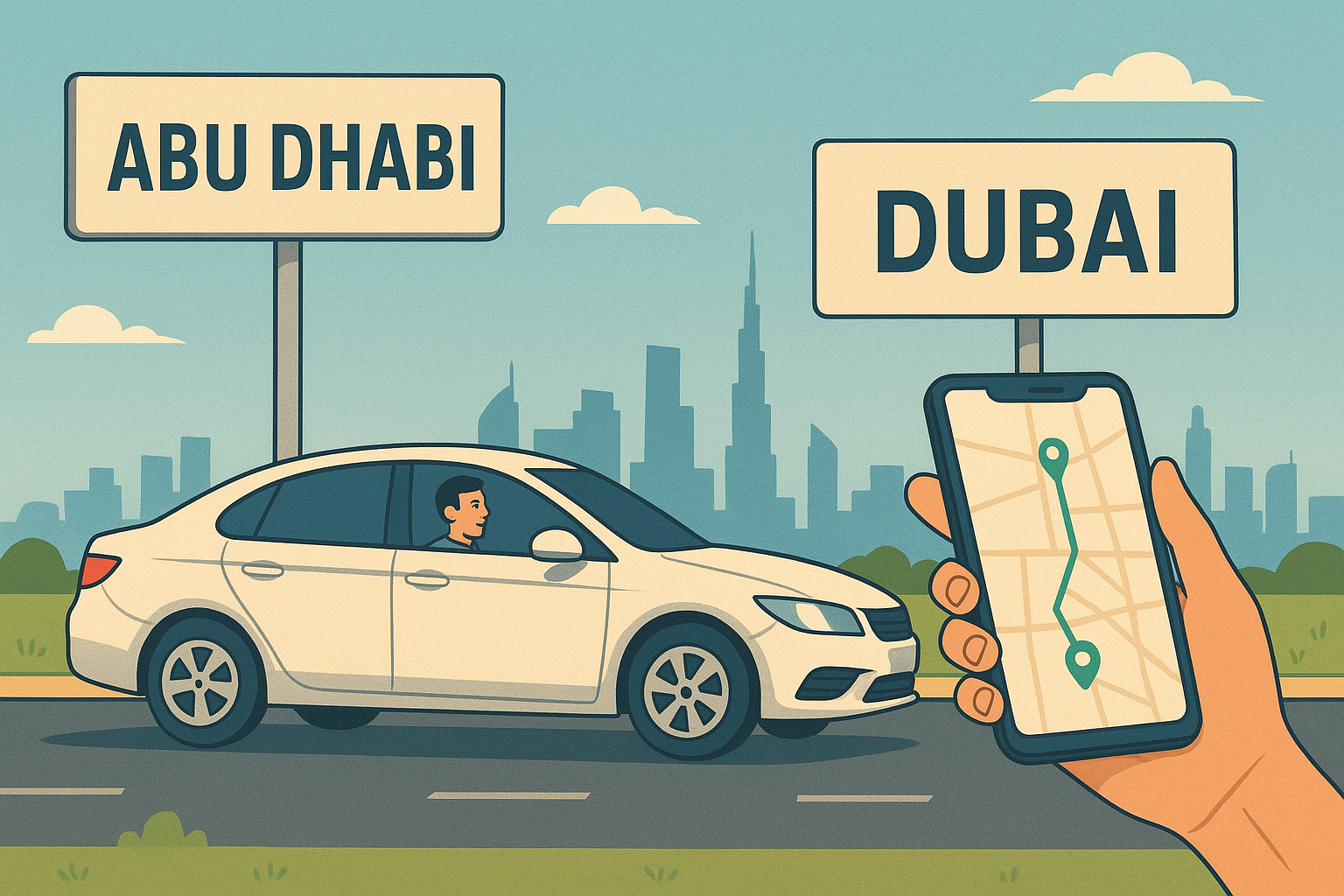
Consider the transit dynamics of the Middle East. The E11 highway connecting Dubai and Abu Dhabi carries hundreds of thousands of daily commuters across a massive, linear corridor. Unlike localized municipal ridesharing, this 140-kilometer artery requires dedicated, high-reliability transit solutions. Enterprise professionals frequently rely on structured carlift networks rather than ad-hoc matching. For instance, platforms managing a carlift Dubai to Abu Dhabi schedule provide the predictable reliability that peer-to-peer models occasionally lack. I spent three months studying transit patterns in the UAE, noting that managed micro-transit fleets offer superior stress reduction on these grueling, long-haul routes. The core philosophy remains identical to a scoop carpool system: aggregate demand, reduce single-occupancy vehicles, and alleviate commuter fatigue. However, the execution adapts to the macro-geography of the region.
Regional Adaptations: The Global Commute
The adaptability of transportation demand management is fascinating. In European centers like Amsterdam or Copenhagen, corporate mobility budgets heavily weight bicycle leasing and train subsidies over automotive ridesharing. In sprawling North American metropolises, however, the automobile remains king, necessitating intelligent high-occupancy vehicle (HOV) strategies. The implementation of dedicated HOV lanes by state transportation departments heavily incentivizes scoop carpool adoption. A driver in Atlanta might tolerate having a passenger purely to access the HOV lane, shaving thirty minutes off their daily drive. Tying corporate mobility software into municipal infrastructure incentives creates a powerful synergy that organically drives user adoption.
Structuring Your Internal Corporate Carpool Program
Deploying a managed mobility solution within a large enterprise is not an IT project; it is a massive change management initiative. If you simply purchase software licenses and send out a mass email, your adoption rate will hover around three percent. I have witnessed this failure pattern repeatedly. To successfully implement a scoop carpool alternative, you must architect a comprehensive rollout strategy that addresses financial, psychological, and operational friction points simultaneously.
First, secure executive sponsorship. TDM initiatives fail when they are relegated to a mid-level facilities manager. You need the Chief Financial Officer to champion the real estate savings, and the Chief Human Resources Officer to champion the employee wellness metrics. Second, restructure your parking hierarchy. Do not ban solitary driving, but make it significantly less convenient. Reserve the premier parking spots closest to the building entrances exclusively for verified carpool vehicles. This visible, daily reinforcement acts as a powerful psychological nudge. Finally, implement a robust communications campaign. Highlight actual employees who have saved thousands of dollars annually by utilizing the platform. Peer validation is the most potent marketing tool at your disposal.
The Future of Enterprise Mobility Networks
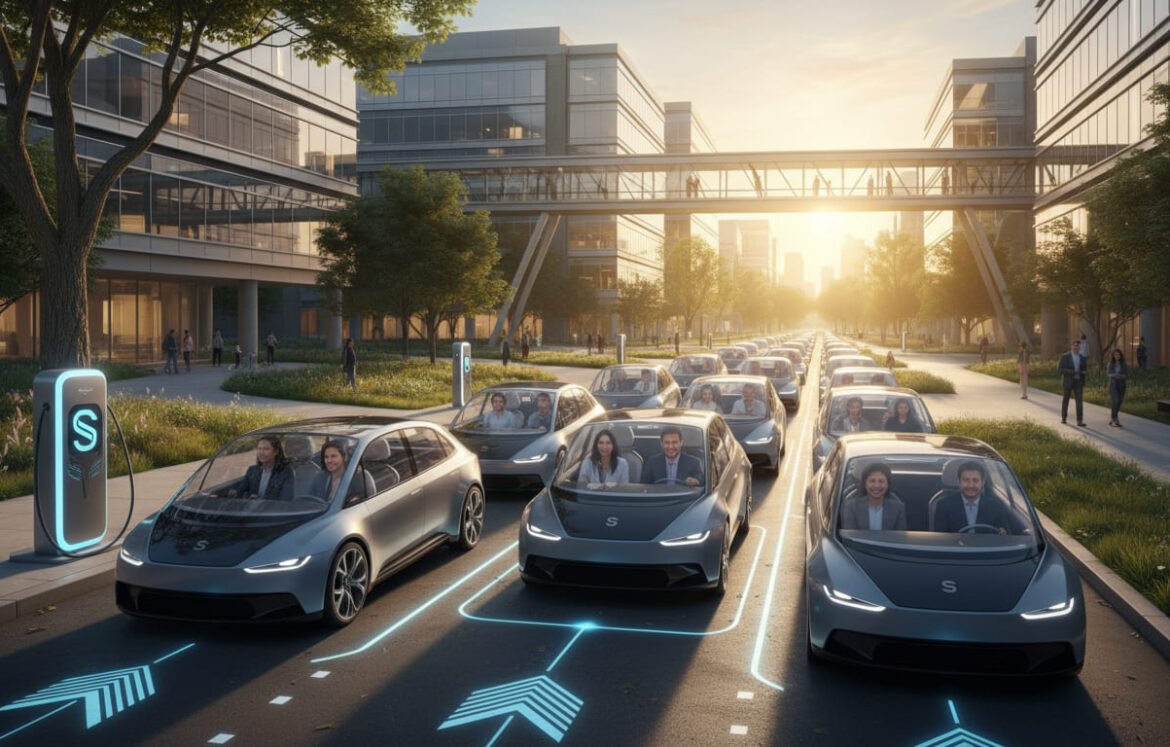
Looking ahead, the integration of autonomous vehicles into the corporate mobility stack will completely revolutionize the concept of the scoop carpool. We are currently reliant on employee drivers to act as the primary transit node. Within the next decade, organizations will deploy fleets of autonomous micro-shuttles that dynamically route through residential neighborhoods based on real-time employee demand. The algorithms currently powering peer-to-peer matches will seamlessly transition to autonomous fleet management.
Until that autonomous future arrives, human-driven ridesharing remains our most effective tool for mitigating the massive operational waste generated by single-occupancy commuting. The friction of the daily drive is entirely solvable. We possess the software, the behavioral data, and the economic imperatives required to optimize our regional transit grids. For a comprehensive look at how these dynamics are shifting the overall workforce landscape, I recommend studying the Harvard Business Review analysis on hybrid commuters. The organizations that recognize mobility as a strategic asset, rather than an external nuisance, will command a distinct advantage in talent acquisition and operational efficiency. The blueprint is clear; it simply requires the organizational will to execute it.