
The Economics and Psychology of the Car Pool to Work
I lost four hundred hours of my life to the Interstate 5 corridor before I realized the math was fundamentally broken. Most professionals view the morning drive as a necessary evil. A localized purgatory. I saw it as a massive, unoptimized hemorrhage of capital and cognitive bandwidth. We accept the solo commute because isolation masquerades as freedom. You control the radio. You control the climate. Yet, the moment you decide to car pool to work, that illusion shatters, replaced by a much harsher, highly profitable reality.
My career spent consulting for enterprise HR departments has proven one unassailable fact: human behavior resists friction. If sharing a ride requires three extra emails a day, the system collapses. If the financial incentives remain opaque, people revert to driving alone. To build a sustainable framework for commuting together, we have to tear down the romanticized concept of the open road and replace it with hard economics, applied psychology, and ruthless logistical efficiency.
| Executive Summary | Details |
|---|---|
| Core Objective | Analyzing the financial, psychological, and logistical frameworks of shared daily commutes. |
| Economic Impact | Solo drivers face hidden depreciation and maintenance costs. Shared rides cut annualized transit overhead by up to 60%. |
| Psychological Factor | Reduced cognitive load and cortisol spikes during peak traffic hours. |
| Corporate Integration | Implementation requires strict adherence to routing software, liability waivers, and tax-advantaged commuter subsidies. |
The Hidden Economics When You Car Pool to Work
Money bleeds out of the tailpipe long before the engine warms up. Most commuters calculate their transit costs by looking at the fuel gauge. This is a rudimentary, ultimately destructive way to view personal finance. Fuel is merely the visible edge of the blade. The true financial damage stems from depreciation, wear-and-tear, and insurance premiums.
Let us examine the mechanics of a twenty-mile daily commute. When you drive solo, you are entirely responsible for the capitalized cost of the asset moving you from point A to point B. Every pothole degrades the suspension. Every mile logged accelerates the vehicle toward its inevitable obsolescence. According to comprehensive data from AAA’s driving cost analyses, the true cost of owning and operating a new vehicle often exceeds ten thousand dollars annually. When you car pool to work, you immediately fractionate these expenses.
I once audited the transit habits of a mid-sized tech firm in Austin. Three engineers lived within a two-mile radius of each other. They each drove separate mid-size sedans to the same parking garage. By forcing them into a pilot program where they shared the daily transit duties, the annualized savings were staggering. We did not just look at gas. We calculated the deferred maintenance schedules. Brake pads lasted longer. Oil changes stretched out. The rapid depreciation curve flattened because the mileage accumulation slowed to a crawl for each individual vehicle.
Beyond vehicle metrics, there is the opportunity cost of capital. The money saved by splitting commute costs is post-tax liquidity. An extra two hundred dollars a month retained by not burning it on the highway can be routed into investment vehicles. This compounds. Over a ten-year horizon, the decision to share a ride isn’t just about saving pocket change; it is a macro-economic strategy for middle-class wealth retention.
Psychological Bandwidth and Commuting Together
We need to talk about cortisol. Traffic is inherently unpredictable, and the human brain despises unpredictability. When you navigate stop-and-go congestion, your sympathetic nervous system kicks into high gear. You are scanning for erratic drivers, monitoring speed limits, and calculating ETA variations simultaneously. This creates a massive cognitive load before you even open your inbox.
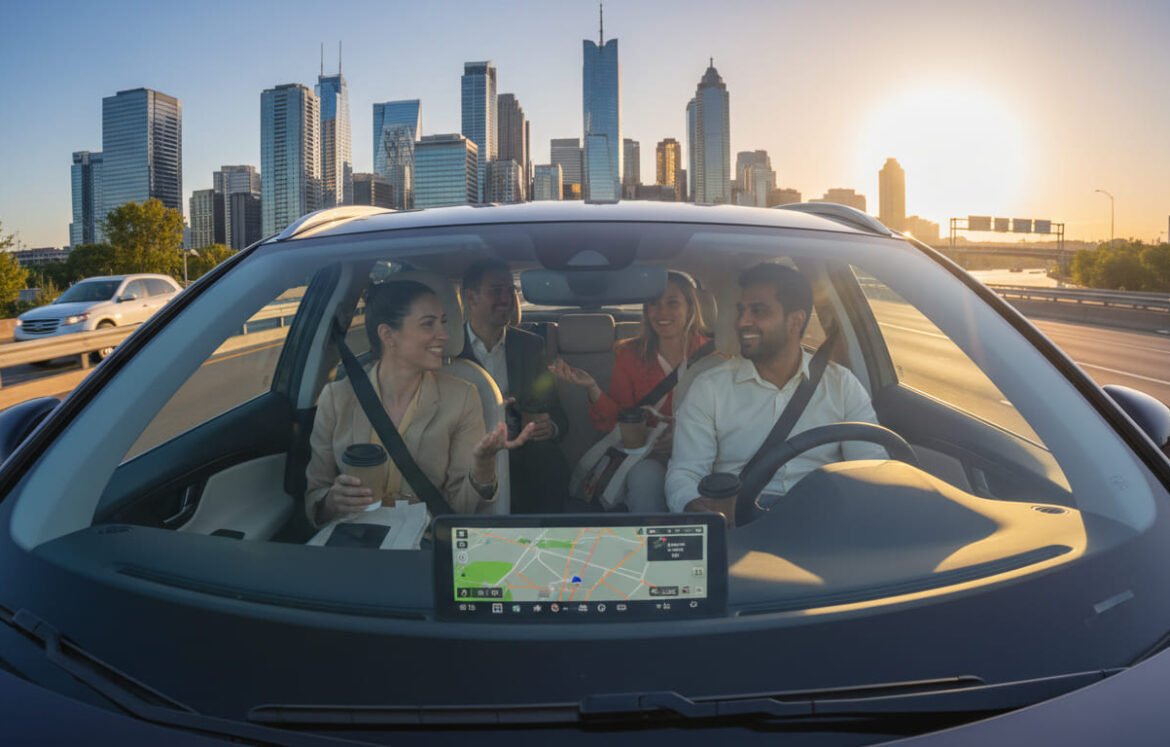
Sharing the driving responsibilities alters this dynamic completely. On the days you are the passenger, the commute transforms into a ‘third space’—a transitional buffer between domestic responsibilities and professional demands. You can read. You can mentally map out your day without the ambient threat of a rear-end collision.
During a consulting sprint in Chicago, I interviewed forty executives about their morning routines. The ones who had organized a private, high-end ride-share system exhibited measurably lower stress markers. They arrived at the office with their executive function intact. They weren’t spending the first forty-five minutes of the workday recovering from the adrenaline spike of nearly missing their exit. The mental preservation achieved when you car pool to work represents a massive, untracked productivity boost for corporations.
Structuring an Office Ride-Share System
Corporate transit initiatives usually fail because HR departments fundamentally misunderstand human laziness. You cannot simply put up a bulletin board in the breakroom and expect organic networks to form. To successfully implement ride-sharing to the office, the structure must be institutionalized, incentivized, and friction-less.
First, tackle the immediate pain point: parking. In dense urban centers, parking is a premium commodity. I advise companies to designate the absolute best parking spots—closest to the elevator, covered, secure—strictly for high-occupancy vehicles. This creates immediate, visible envy. When solo drivers see a junior analyst pulling into a prime spot just because they brought two colleagues along, the cultural shift begins.
Second, the financial subsidies must be restructured. Many companies offer generic commuter benefits. These need to be weaponized to favor group transit. Under IRS tax codes, there are specific provisions for commuter highway vehicles. Employers can provide tax-free transit benefits that explicitly reward shared commutes. By subsidizing the cost of vans or high-capacity vehicles used for commuting, the company lowers its payroll tax burden while functionally giving employees a raise.
Third, implement a guaranteed ride home program. The absolute biggest deterrent to sharing a commute is the fear of being stranded. What if someone has a family emergency at noon? What if someone needs to work late? The company must guarantee, and pay for, a solo ride home (via taxi or ride-hailing app) for any participant who experiences an unexpected schedule deviation. This removes the primary psychological barrier to entry.
Environmental Metrics of Shared Transit
Corporate sustainability reports are frequently filled with vague promises about reducing paper consumption or using energy-efficient lightbulbs. These are rounding errors compared to Scope 3 emissions—specifically, employee commuting. If a company is serious about its carbon footprint, altering how its workforce arrives at the building is the most aggressive lever it can pull.
An internal combustion engine operates with terrifying inefficiency. Moving a two-ton metal box to transport a single 170-pound human is an environmental disaster. When you double the occupancy of a vehicle, the per-capita emissions effectively halve. According to the Environmental Protection Agency, the transportation sector remains one of the largest sources of greenhouse gas emissions. Consolidating commuters attacks this metric directly.
I tracked the carbon offset of a specialized manufacturing plant that transitioned forty percent of its workforce to shared commuting. We measured the reduction in volatile organic compounds (VOCs) and nitrogen oxides (NOx). The numbers were equivalent to planting a small forest. Furthermore, the reduction in localized particulate matter (PM2.5) around the factory’s parking infrastructure improved the immediate air quality for the surrounding community. Environmentally, the decision to car pool to work scales with brutal, beautiful efficiency.
Navigating Logistics: How to Car Pool to Work Efficiently
Theory is clean; practice is messy. The actual day-to-day execution of a shared commute requires establishing a rigid, almost militaristic set of ground rules. Without rules, resentment breeds. Resentment destroys the network.
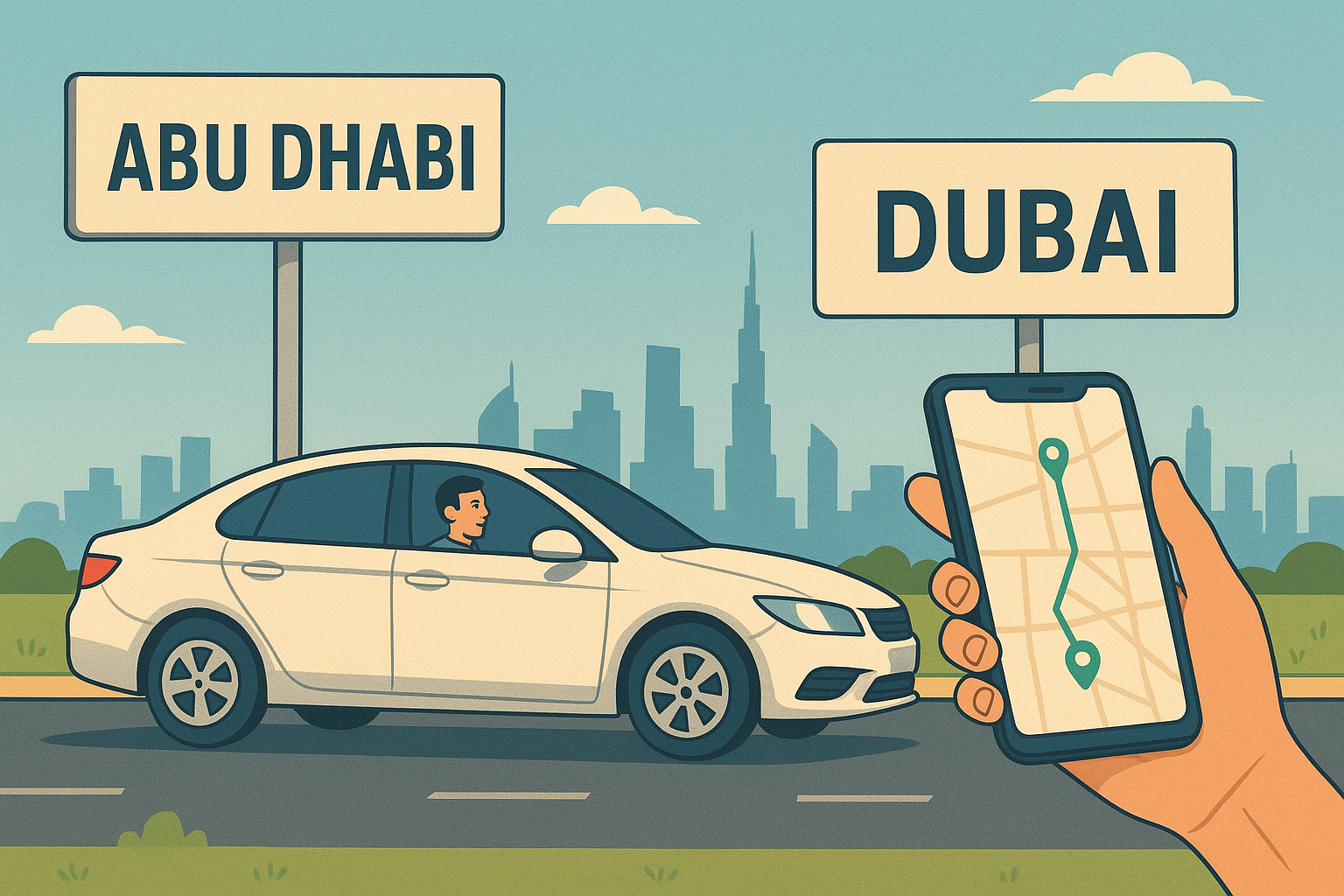
Rule number one: The five-minute absolute threshold. If you are not on the curb, ready to enter the vehicle within five minutes of the agreed-upon time, you are left behind. No exceptions. No returning. Commutes rely on fragile temporal windows. Managing long-haul logistics requires strict reliability, especially in highly demanding regions. Professionals who car pool to work across major highway corridors—like the infamous stretches between Dubai and Abu Dhabi—understand that a five-minute delay cascades into a forty-minute arrival deficit. You respect the clock, or you drive yourself.
Rule number two: Environmental controls belong to the driver. The person taking on the liability of operating the heavy machinery dictates the climate control and the audio landscape. Passengers can wear headphones. If the driver prefers absolute silence or aggressive death metal to maintain focus, that is the toll the passengers pay for a free ride.
Rule number three: Odor neutrality. A confined automotive interior is a highly sensitive micro-environment. Strong perfumes, intense colognes, and pungent breakfasts are strictly forbidden. I once witnessed a highly functional arrangement implode because a senior manager insisted on eating garlic-heavy tuna salads during the afternoon transit. Respect the airspace.
Rule number four: Financial transparency. If the group is rotating vehicles evenly, no money needs to change hands. However, if one person assumes the role of the primary driver, a strict compensation model must be established upfront. Do not rely on ad-hoc venmo requests. Set a flat monthly fee that covers fuel, a fraction of maintenance, and the driver’s time. Pay it on the first of the month, unconditionally.
The Technology Stack for Commuter Networks
We are no longer relying on corkboards and pushpins. To optimize ride-sharing to the office, utilizing the right technology stack is paramount. The matching process must be algorithmic. Modern transit platforms analyze home addresses, shift schedules, and routing preferences to build the most efficient pickup sequences.
These platforms utilize asynchronous routing logic. If employee A lives ten miles north, and employee B lives five miles north along the exact same arterial road, the software clusters them. But it goes deeper. Advanced implementations factor in historical traffic data. They calculate whether pulling off the highway to grab a third passenger negates the time saved by utilizing the High Occupancy Vehicle (HOV) lane.
Furthermore, payment integrations streamline the awkwardness of cost-sharing. Dedicated apps can automatically split tolls and calculate micro-payments based on daily participation. If an employee is out sick, the algorithm adjusts the financial burden dynamically. By outsourcing the logistics and the math to software, the human friction points evaporate.
Insurance and Liability Realities
This is the section most people ignore until metal crumples and glass shatters. What happens when your shared commute is involved in a catastrophic collision? The liability landscape is complex and varies wildly depending on your jurisdiction and how your arrangement is structured.
In standard personal commuting scenarios where co-workers are simply sharing the ride and casually splitting gas money, standard personal auto insurance policies generally apply. The driver’s liability coverage will typically cover injuries sustained by the passengers.
Insurance carriers refer to this as ‘livery’ or commercial use. If an accident occurs while you are operating your personal vehicle for profit, the claim will be denied. I highly recommend consulting resources like the Insurance Information Institute to understand the exact definitions of commercial vs. personal use in your state or country.
For corporate-sponsored vanpools, the liability shifts. The corporation or the third-party transit provider must carry extensive commercial liability policies. Always demand to see the policy limits before stepping into a company-mandated shared vehicle.
Global Case Studies in Transit Efficiency
To understand the true potential of shared transit, we must look at regions where solo driving has become economically or structurally impossible. Take Singapore, for instance. The government’s aggressive taxation on vehicle ownership (via the Certificate of Entitlement) forces extreme transit efficiency. Ride-sharing to the office isn’t a quaint environmental initiative there; it is a financial necessity. Corporate transit networks in Singapore operate with the precision of a Swiss watch, integrating seamlessly with public light rail systems.
In Northern Europe, particularly the Netherlands, the concept of the shared commute is heavily integrated with cycling infrastructure. Companies provide massive shower and locker facilities, actively penalizing those who drive solo by removing parking access entirely. The culture treats the solo driver not as a standard, but as an aberration.
Even in the sprawling car-centric cities of the American Sunbelt, change is happening. In Los Angeles, the expansion of HOV and toll lanes has created a distinct class system on the highway. Those who car pool to work fly past stagnant miles of solo drivers. The time savings alone have spurred the creation of informal ‘slugging’ networks—where strangers form impromptu transit alliances at designated pickup spots simply to access the fast lanes. When the pain of traffic exceeds the fear of strangers, human ingenuity takes over.
Future Transit Initiatives
The shared commute is on the precipice of a massive technological evolution. The transition from human-driven, privately owned vehicles to autonomous, corporate-leased fleets will fundamentally rewrite how we arrive at the workplace. Imagine a scenario where a company leases a fleet of Level 4 autonomous electric vans.
These vehicles will deploy from charging hubs at 6:00 AM. They will use real-time predictive analytics to map the most efficient pickup routes for clustered employees. The interior will not look like a traditional van; it will resemble a rolling conference room. The workday will officially begin the moment the employee steps inside the vehicle. Meetings will be conducted at sixty miles per hour. The commute will transition from ‘lost time’ to ‘billable hours.’
This is not science fiction. Major automakers and tech conglomerates are currently piloting these exact architectures. The sheer economic waste of millions of individual engines burning fuel while millions of workers stare blankly at taillights is too massive an inefficiency for capitalism to ignore indefinitely. The market demands optimization.
FAQs
Over years of consulting, I receive the same set of objections and queries regarding the implementation of shared transit. Addressing these systematically is crucial for widespread adoption.
How do we handle wildly differing schedules? Strict clustering. You do not force a 9-to-5 worker to ride with an 8-to-4 worker. You must segment your participant pool by rigid schedule blocks. If someone requires a flexible schedule, they are not a viable candidate for the core program. They must rely on public transit or solo driving.
What if a participant continuously violates the rules? Swift removal. A commute network is a fragile ecosystem. One person who is consistently late or brings chaotic energy into the vehicle will cause the other members to quit. The primary organizer—whether that is HR or the designated driver—must possess the authority to eject problematic individuals without bureaucratic delays.
Does this work in rural areas? It is significantly harder, but entirely possible. Rural commutes involve longer distances, making the financial savings even more pronounced. However, the lack of centralized hubs means pickup routing must be handled meticulously. Often, establishing a ‘park and ride’ rendezvous point in a central parking lot is more efficient than door-to-door pickups in dispersed rural regions.
Is the loss of independence worth it? This is the ultimate question. Independence on the road is largely an illusion. You are bound by traffic laws, congestion, and fuel prices. You are not free; you are simply isolated. Trading that isolation for significant financial savings, reduced stress, and reclaimed time is a highly asymmetric bet. The initial discomfort of adapting to a group schedule fades rapidly once the tangible benefits materialize.
Ultimately, transforming how we move through our cities requires overriding deeply ingrained habits. The solo morning drive is a monument to inefficiency. Breaking that monument down piece by piece—through better corporate policy, ruthless logistical execution, and a clear-eyed understanding of the economics—is not just beneficial. It is essential for the future of urban infrastructure and professional sanity. The math is undeniable. All that remains is the discipline to execute the model.